

23-03-2026 20:16
 Miguel Ángel Ribes
Good eveningI'm unable to identify this Coprotus o
21-03-2026 15:13
Lepista ZacariasHello everyone, Does any one know of any literatu
20-10-2017 09:23
Garcia SusanaEste otro crecía en el mismo trocito de madera qu
20-03-2026 16:16
 Edvin Johannesen
These 0.5 mm diam. acervuli were breaking through
19-03-2026 19:34
 Filip Fuljer
Hello everyone,a few days ago I collected this str
19-03-2026 18:25
 William Slosse
Good evening everyone, On 18/03/26 I found a few
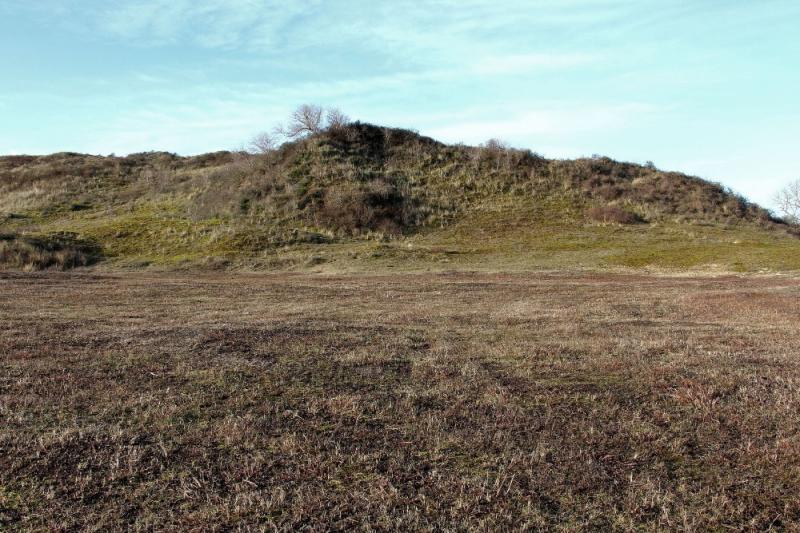
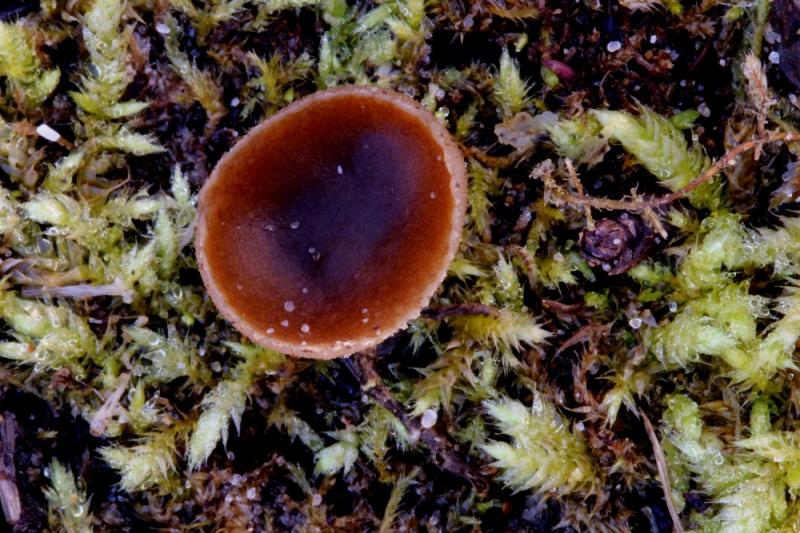
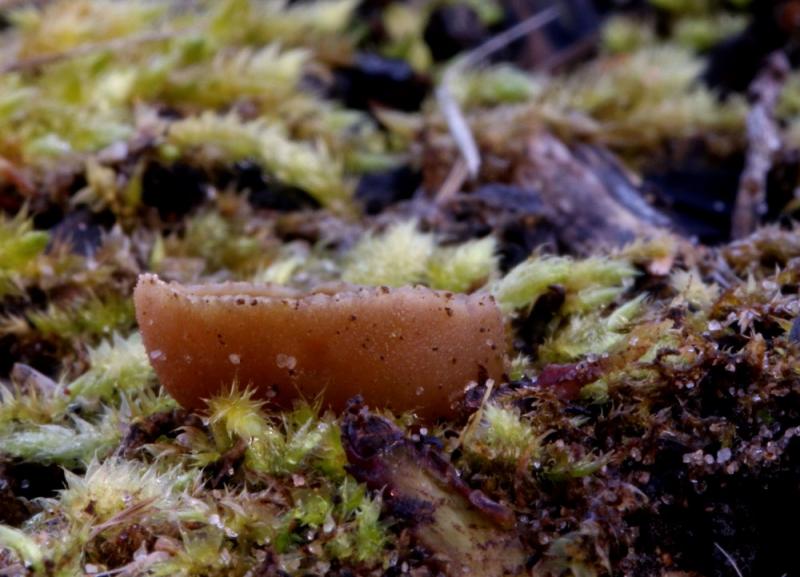
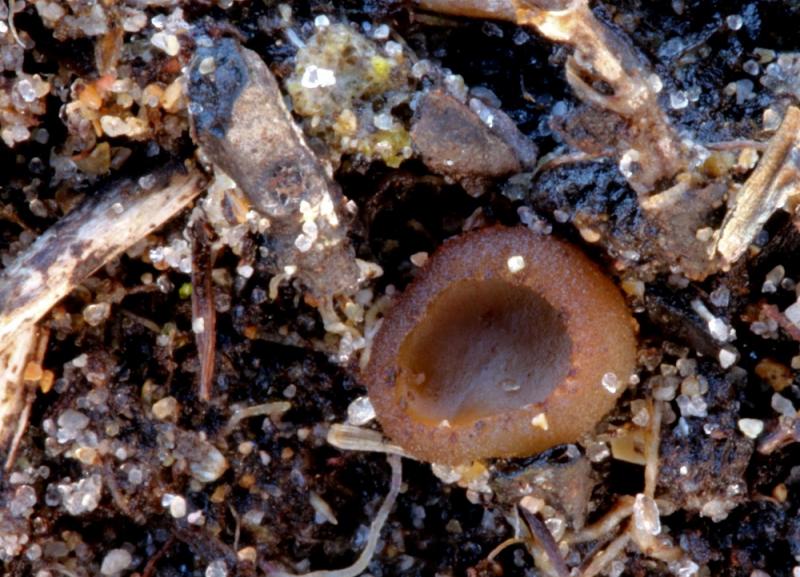
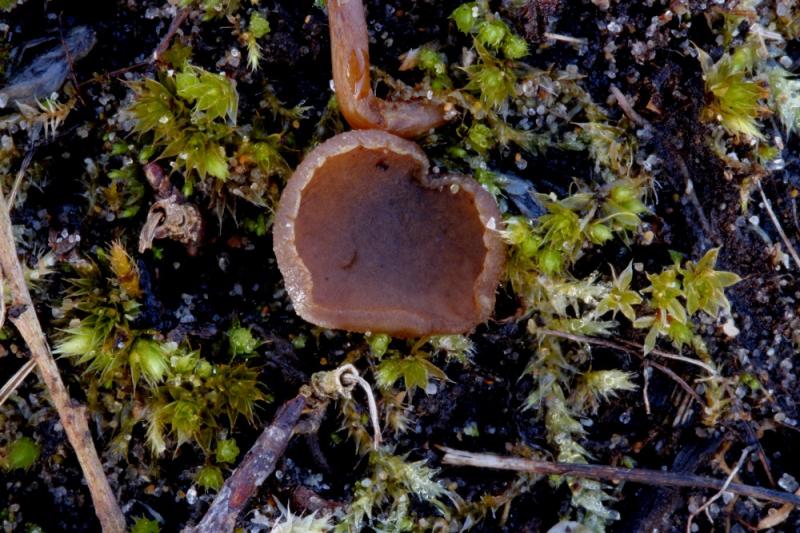
Good afternoon everyone,Yesterday 05/02 I found a large number of small Pezizas between recently mown scrub of Salix repens on the floor of a damp dune valley in the Belgian nature reserve Ter Yde, Oostduinkerke. This dune valley is extensively grazed by ponies.
I am thinking, although not immediately dung in the area, of Peziza fimeti. But I am not sure, varia is a possibility too but I never saw this species so tiny.
Anyone have any confirmation/correction?
Macroscopic:
° diameter apothecium up to 12mm
° outer wall yellow-brown - faun; hymenium darker, reddish brown
° sitting, no stem
° edge apothecium flocculent
° apothecium dextrinoid (Melzer)
Microscopic:
° Asci:
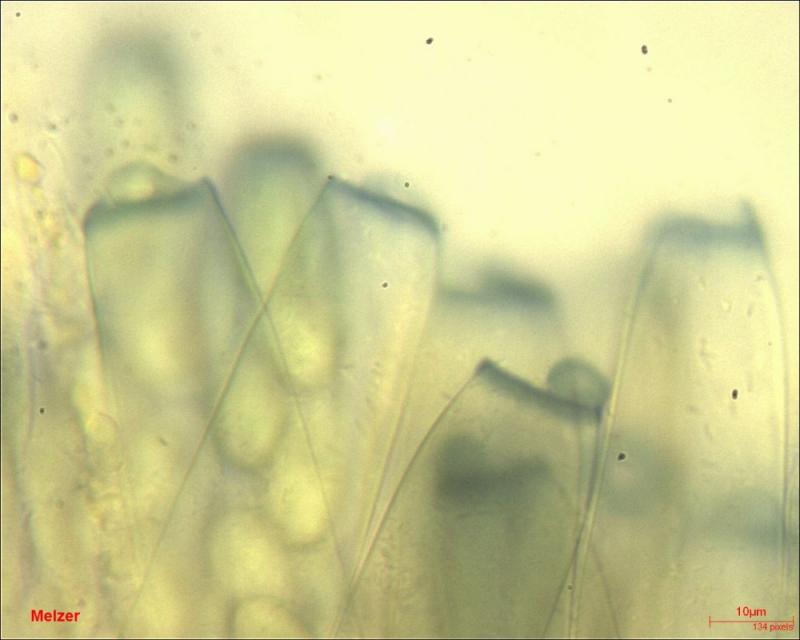
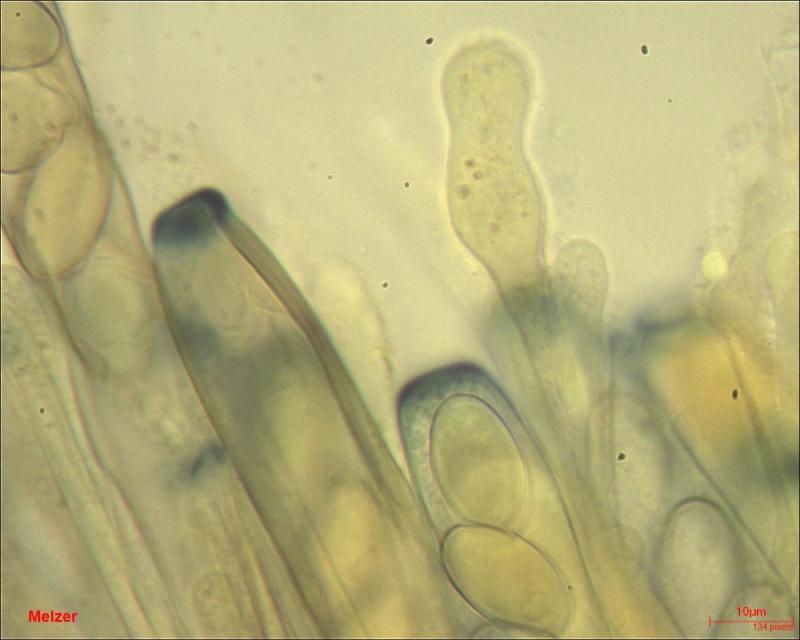
-amyloid type WTR
- no croziers (seems to me)
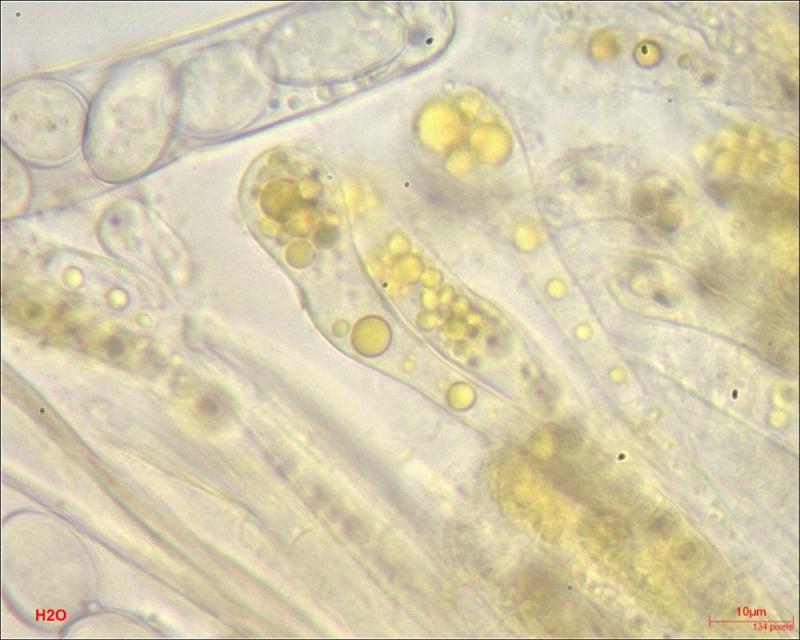
° paraphyses:
- moniliform
- VBs with yellow pigment
- ø tops 7.45 – 11.83µm
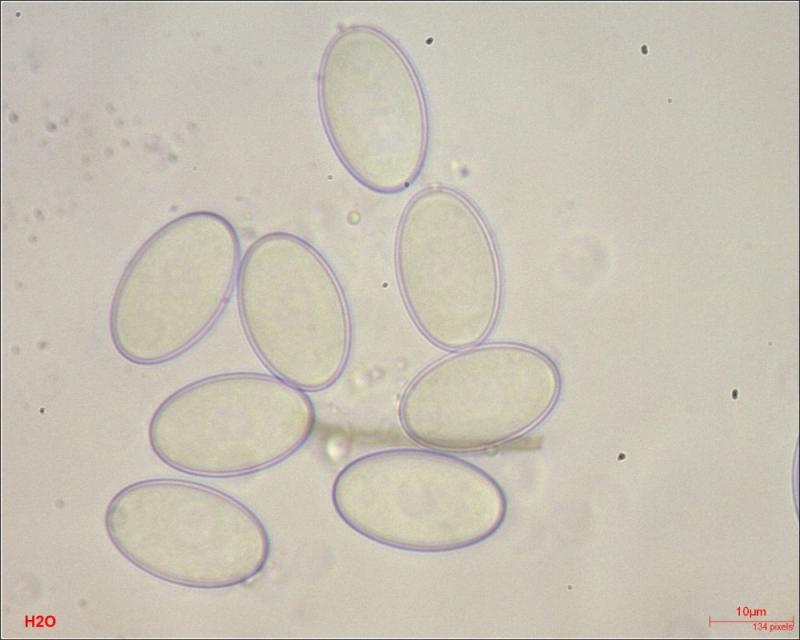
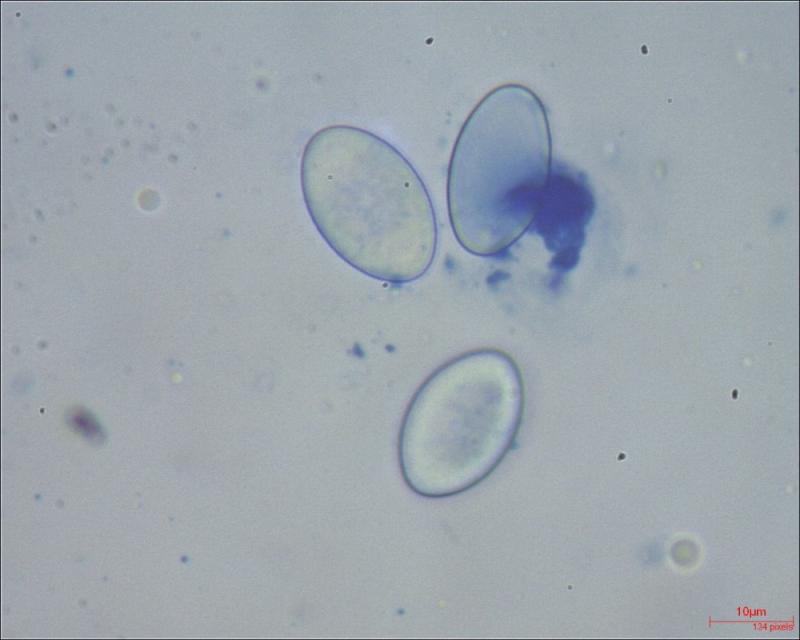
° Spores:
- smooth
- hyaline
- with nucleus & droplets at the poles
- 19.05-20.86 x 10.92-12.80µm
- Av(30) = 11.82 x 19.98µm
- Q 1.58-1.82
- Q(av30) = 1.68
Thx in advance,
William
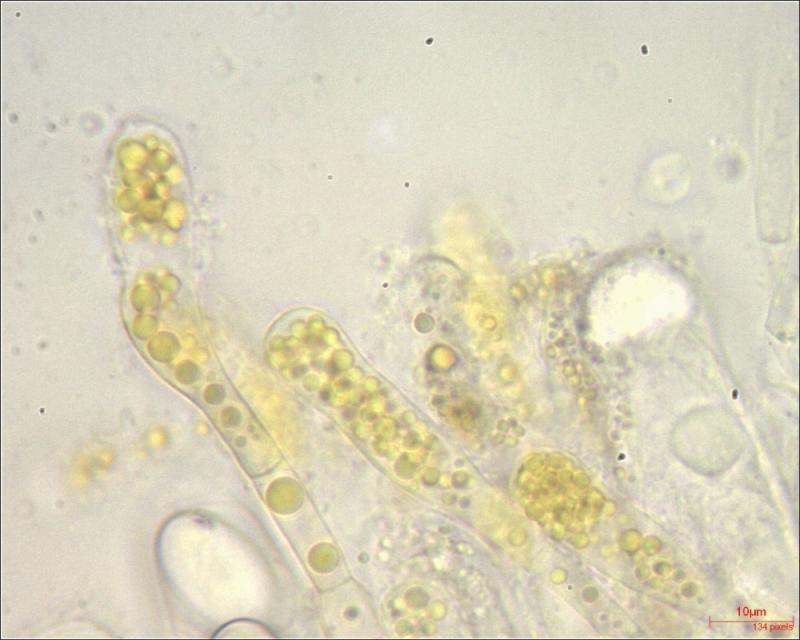
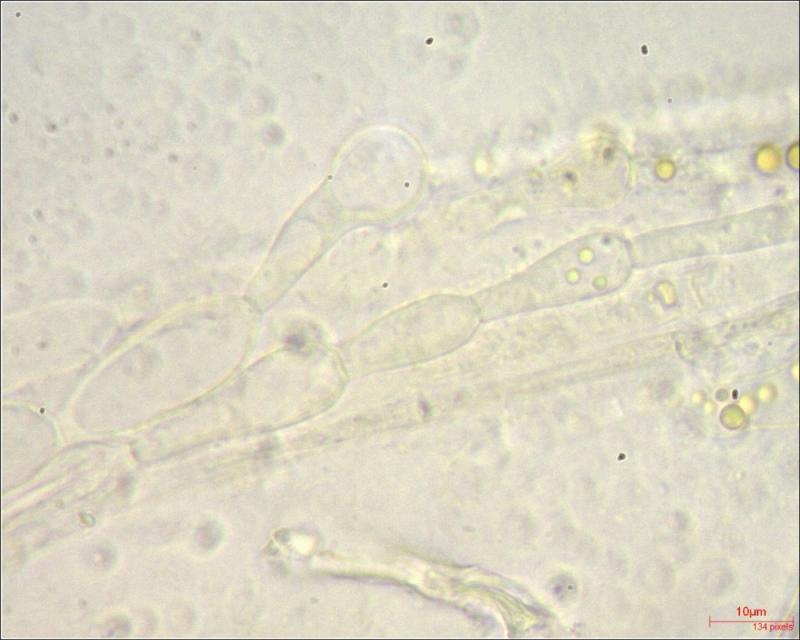
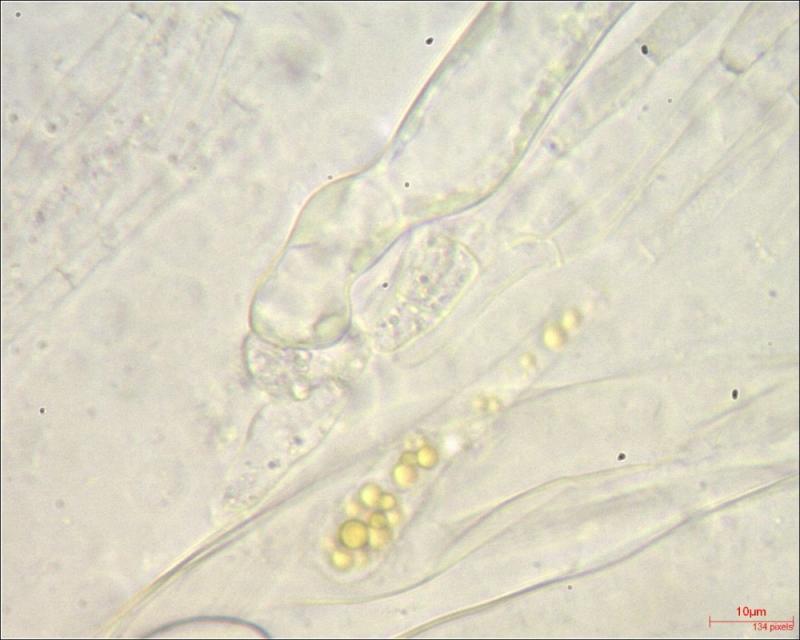

Your description fits well P. fimeti, except the substrate. I don't have any experience of this species not growing on dung...
Two points:
- the moniliform paraphyses are rather common in Peziza s. str., this is not constant and often are due to the external moisture.
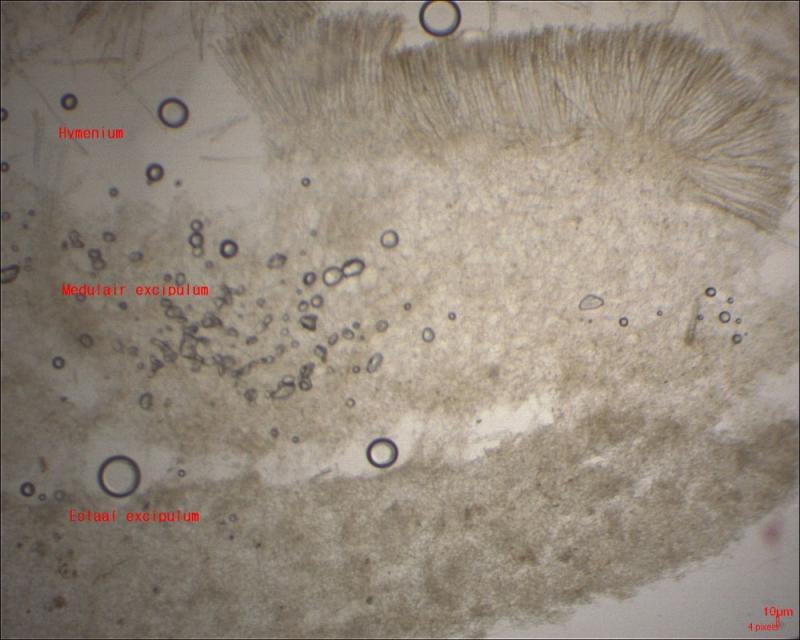
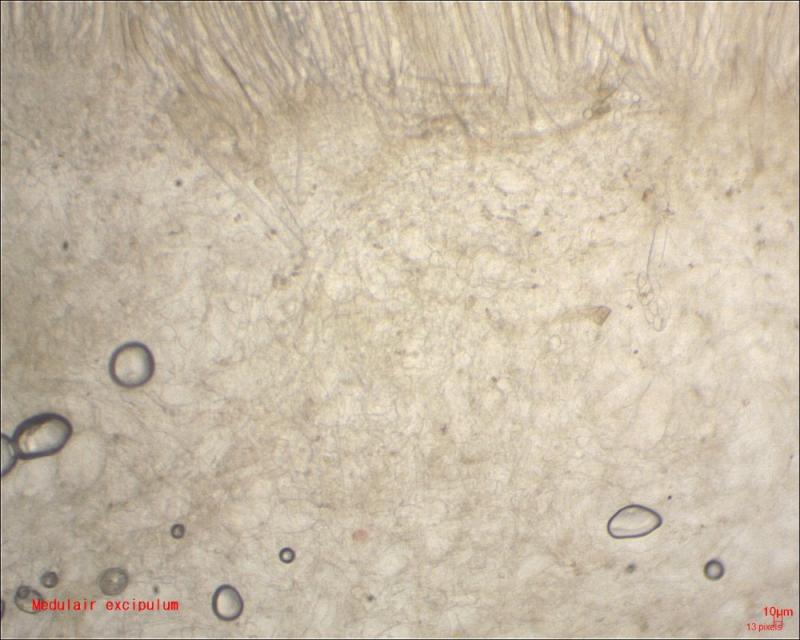
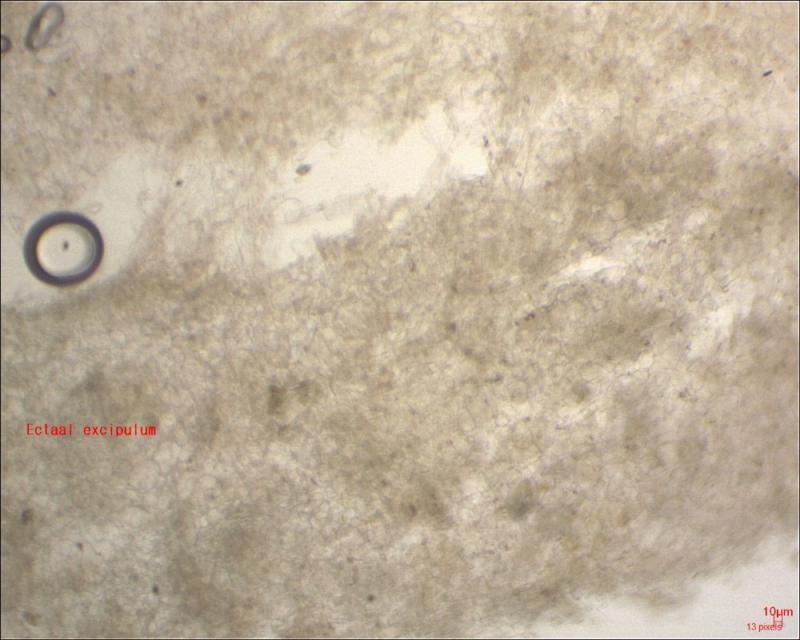
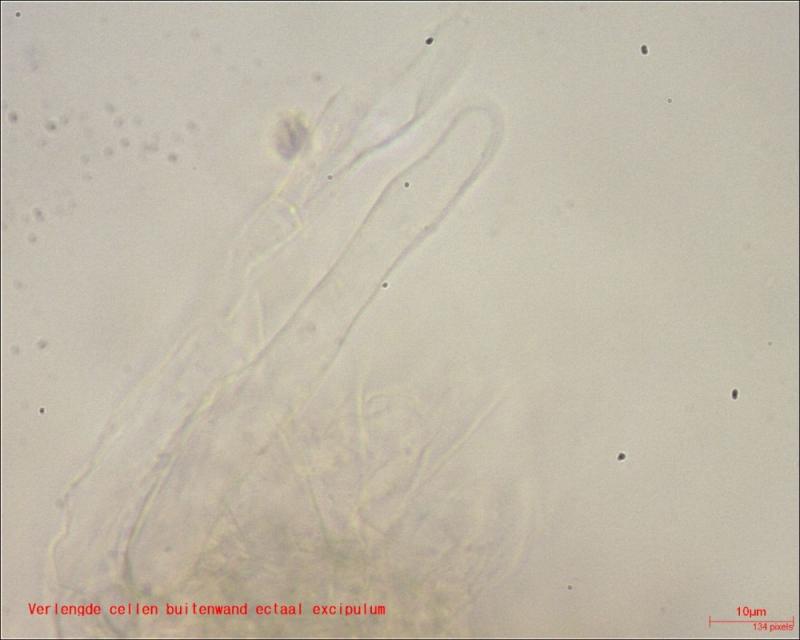
- the excipulum of P. fimeti shows 4 layers: a medullary excipulum divided in three parts because there exists a thin layer of hyphae inserted between the cells of the medullary excipulum, and an ectal excipulum of t. globulosa (some emerging hyphae can be seen in the outermost part).
Very interesting info about the molinifomr paraphyses.
I will try to make another coupe to examin the excipulum (there is still fresh material in the box).
About the substrate:
apparently the Pezizas grew on soil, not on wood or woody substrates, and at first glance even less so on dung. The vegetation on the finding place was mown with the cutter bar. As a result, there is a possibility that pony dung was grind and spread in this way and that these pezizas still developed on dung residues. But this is hard to prove, I think. The only certainty is that there is pony dung at the site of these Pezizas.